Sodium Persulfate for Polymerization: Supplier Checklist for Buyers
For buyers sourcing [sodium persulfate] for polymerization, price is only one part of the decision. In actual purchasing, buyers usually want to know whether the supplier can provide stable specifications, complete documents, practical packing details, and reliable shipment support.
This is especially important when sodium persulfate is used in regular production. If the material varies from batch to batch, or if COA, SDS (MSDS), TDS, packing, or shipment details are unclear, the order may create extra work for the buyer before it even reaches production.
How Sodium Persulfate Is Used in Polymerization
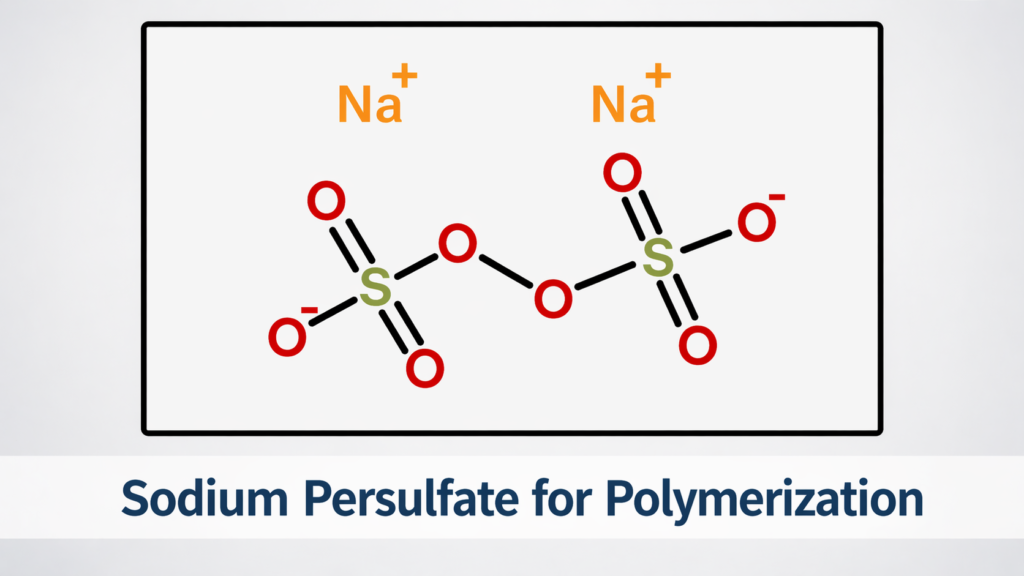
Sodium persulfate is commonly used as an initiator in polymerization applications. In many industrial processes, it is selected because it can support radical generation under suitable process conditions.
In practical use, sodium persulfate may be associated with emulsion polymerization, solution polymerization, and related polymer production processes. It is often discussed in connection with acrylic monomers, vinyl acetate, vinyl chloride, and co-polymerization systems involving styrene, acrylonitrile, or butadiene.
For buyers, the key point is not only whether sodium persulfate can be used in polymerization. The more practical question is whether the supplier can support stable quality and provide the documents needed for review, testing, or regular purchasing.
Polymerization Initiator Use
In polymerization applications, sodium persulfate is valued mainly for its role as an initiator. Buyers usually need to confirm whether the product specification is suitable for their own process requirements before placing an order.
Application Fit Depends on Process Requirements
Polymerization conditions can vary by material, process, and production setup. For this reason, buyers usually check product specifications, purity, active oxygen, moisture, and batch consistency before moving forward.
What Buyers Should Confirm Before Ordering
Before ordering sodium persulfate for [polymerization], buyers usually review several practical points:
- product purity and specification
- CAS number and product identification
- active oxygen content
- moisture level
- batch consistency
- availability of COA, SDS (MSDS), and TDS
- packing options
- shipment and export support
These are not just formal checks. For many buyers, they are part of the real supplier evaluation process.
Specification and Product Identification
The first step is usually to confirm the basic product information, including CAS number, chemical formula, purity, and specification. This helps buyers compare suppliers more clearly and avoid confusion during internal review.
Active Oxygen, Moisture and Batch Consistency
For polymerization buyers, batch consistency can be just as important as the nominal purity value. Active oxygen and moisture are often checked because they may affect whether the material is suitable for the buyer’s process requirements.
Documents Before Trial or Order Confirmation
COA, SDS (MSDS), and TDS are often requested before trial use, internal approval, or final order confirmation. A supplier that can provide these documents clearly and without repeated follow-up is usually easier to work with.
Why Batch Consistency Matters for Polymerization Buyers
For polymerization applications, buyers often care about repeatability. If one batch performs differently from another, it can create uncertainty in production planning, testing, or process control.
This is why buyers do not usually evaluate sodium persulfate only by price. They also look at whether the supplier can maintain stable specifications, provide consistent documentation, and support repeat orders over time.
A low quotation may look attractive at first, but if batch quality is unstable or communication is unclear, the actual purchasing cost can become higher than expected.
Packing and Shipment Support Should Be Checked Early
Packing is not a small detail in chemical purchasing. Buyers often need to know how sodium persulfate will be packed, whether pallet arrangements are available, and how shipment coordination will be handled.
For export orders, this becomes even more important. Clear packing details, export documents, and shipment follow-up can reduce unnecessary back-and-forth between the buyer, supplier, and freight forwarder.
A reliable supplier should be able to explain packing options, provide basic shipment information, and support export coordination in a practical way.
Supplier Checklist for Buyers
When evaluating a sodium persulfate supplier for polymerization, buyers can use the following checklist:
- Does the supplier provide clear product specifications?
- Can the supplier provide COA, SDS (MSDS), and TDS?
- Are active oxygen, moisture, and purity clearly stated?
- Is the supplier able to support batch consistency for repeat orders?
- Are packing details available before order confirmation?
- Can export coordination and shipment support be handled clearly?
- Does the supplier understand industrial applications, not just general chemical supply?
This checklist is simple, but it helps buyers avoid many common problems before placing an order.
How DEGUSA CHEMICAL Supports Sodium Persulfate Buyers
DEGUSA CHEMICAL supplies sodium persulfate for industrial applications, including [PCB etching], polymerization, [water treatment], and soil remediation. For qualified business inquiries, support may include:
- COA
- SDS (MSDS)
- TDS
- packaging details
- export documentation support
- shipment coordination support
For buyers, this support is often just as important as product availability. Clear documents, practical communication, and stable supply can make the purchasing process much easier to manage.
Conclusion
Sourcing sodium persulfate for polymerization is not only about finding a product source. It is about finding a supplier that can support the order with stable specifications, complete documents, practical packing information, and reliable shipment coordination.
If you are sourcing sodium persulfate for polymerization applications, [please contact us] for product information, technical documents, packing details, or quotation support.